Thomas Bordier
The AI frontier is a product problem.
I do product at Gradium, a foundational voice AI lab in Paris: audio language models that listen, speak and clone a voice in real time. Before that I owned model quality at Photoroom, the AI visual platform e-commerce businesses use to sell. Generative AI has no ground truth, so I build it: the evals that tell you when a model is better, from a public benchmark to the product-fidelity push behind the 2026 AI bets. I trained as a scientist at École PolytechniqueThe schoolFrance's top engineering school. and the MVAThe degreeFrance's elite AI master's, where Mistral's founders trained., then taught neural networks to read cardiograms at Cardiologs until Philips bought it. Cardiograms, ships, cartoons, product photos, voices: I have seen where AI creates real value and where it quietly fails. It is easy to demo, hard to make useful. My job is the second part.
Track record
A foundational voice AI lab in Paris, built by researchers out of Kyutai, Google DeepMind and Meta FAIR on a $70m seed. Audio language models that transcribe, speak and clone a voice in real time, behind one API.
The AI visual platform for e-commerce: 300m downloads, last valued at $500m. Built the evaluation stack for generative models, including a benchmark ranked by 9,000 public votes. In 2026, made product fidelity a company bet: turned “it’s not realistic” into criteria people could agree on, ranked failures by severity with trained annotators, and got the ML team to a fix that shipped.
AI-powered kids’ entertainment. Streamlined how a multilingual YouTube portfolio is run, through user research and rapid prototyping.
Vessel data turned into operational decisions. Doubled ARR and launched a wind-installation tracker that signed Tier 1 operators.
Four months testing ideas from zero at the talent investor. Learned to kill the weak ones fast.
Neural networks reading cardiograms, shipped to clinical production: two patents, enterprise deals in a regulated sector. Bought by Philips.
École Polytechnique · MVA (Mathematics, Vision & Learning), ENS Paris-Saclay
Writing
Notes on making AI useful: short, practical, and written from inside the building.
01I built an open arena on Hugging Face: four background removers head to head, blind, ranked by public vote. 9,000 votes and an Elo ranking later, Photoroom placed first. A clean cutout is easy to claim and hard to prove. Votes at scale settle it.
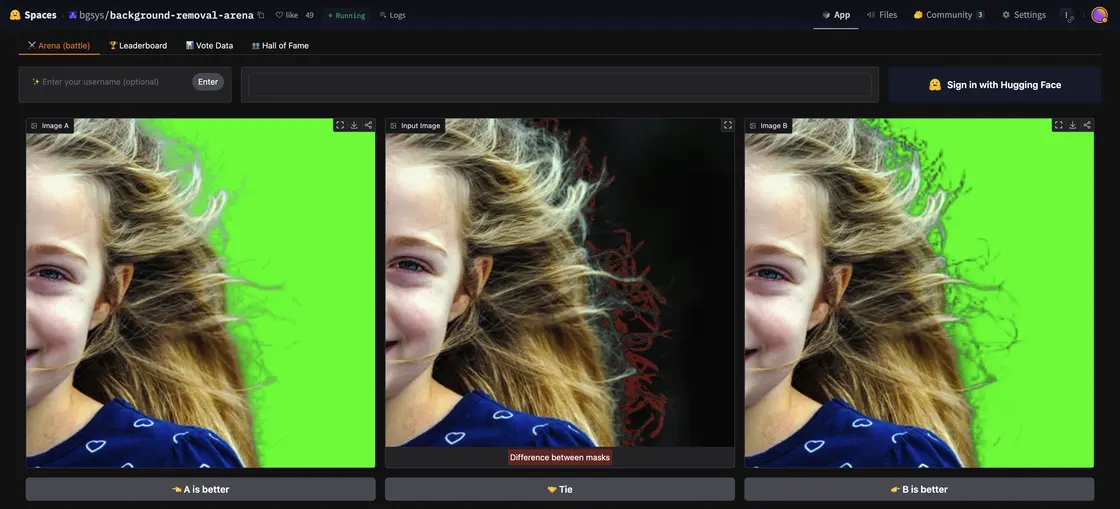
Generative AI has no ground truth, so evaluation builds one. Code cannot judge an image and off-the-shelf raters are not there yet, so define the criteria with humans, then train your own raters on their labels. Every label is measurement today and training data tomorrow.
Advisory
I advise a small number of teams on three things, usually with a founder or product lead shipping their first AI surface.
AI product strategy
Which capabilities deserve a bet, and which are demos in disguise.
Evals & AI quality
Whether the feature actually works, measured properly rather than theatrically.
0 → 1 discovery
From fuzzy idea to shipped product, quickly, without shipping junk.